
QUANTUM IN PICTURES
Revolutionizing Quantum Literacy Through Visual Mathematics
Born in Oxford
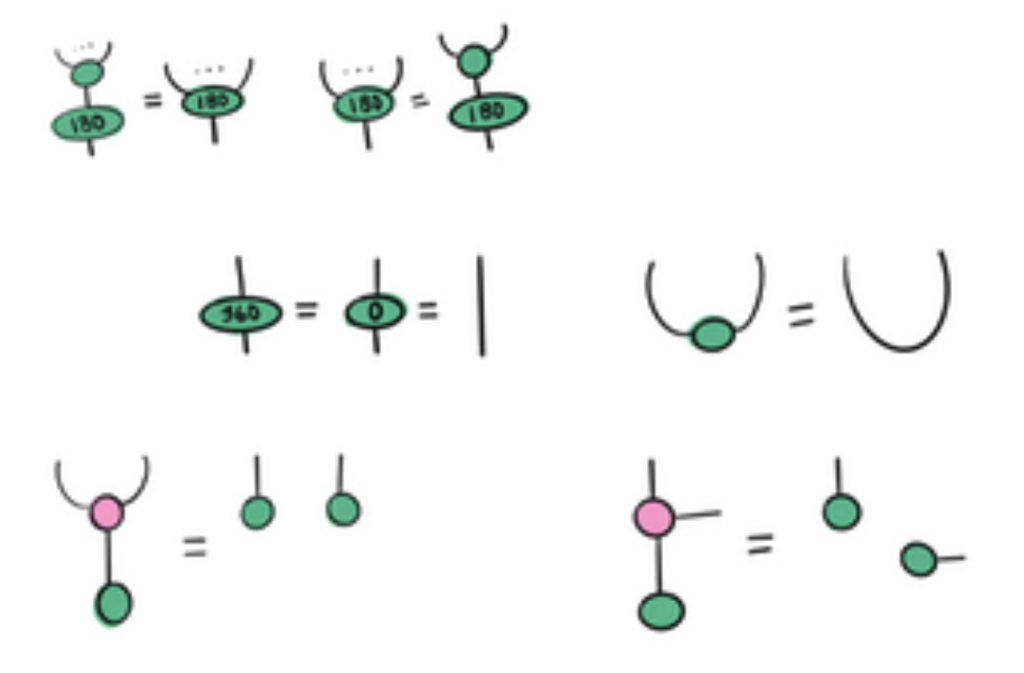
Quantum in pictures is a revolutionary visual calculus designed to advance quantum literacy and empower the next generation of the STEM workforce.
This powerful tool transforms complex quantum operations into intuitive, visual representations, making the invisible world of quantum mechanics more accessible and engaging.
Traditionaly, quantum theory relies on the abstract complex mathematics of Hilbert space -a framework that often created a steep learning and operation barrier.
Quantum in pictures reinvents this process by introducing a visual language without requiring mastery of complex mathematics.
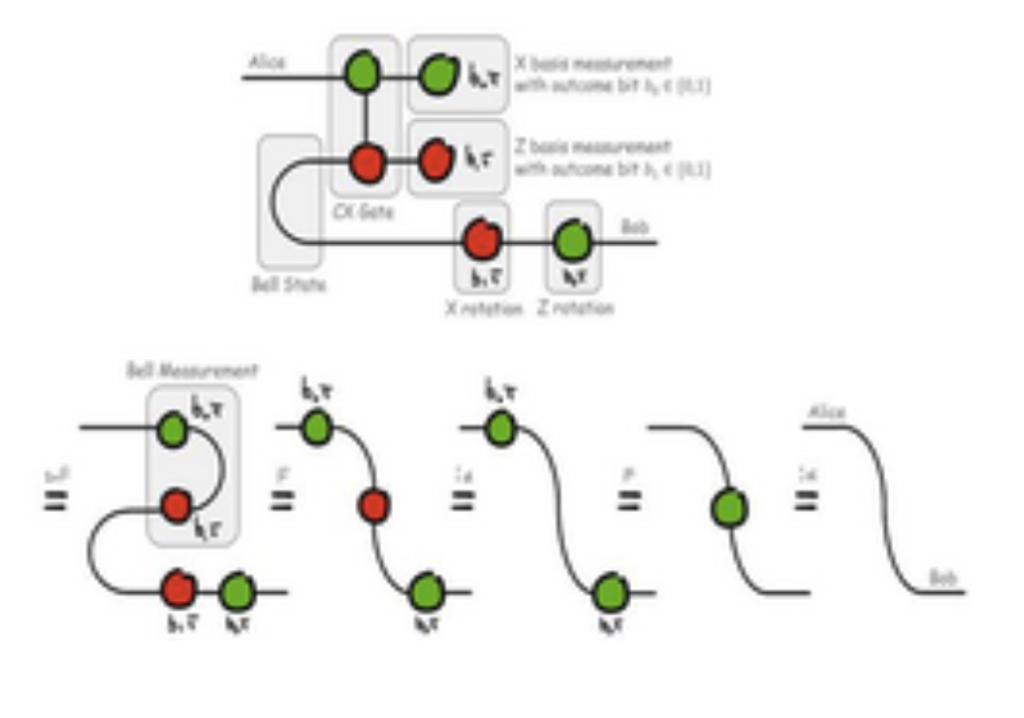
By removing the barriers of advanced mathematical formalism, Quantum in Pictures empowers a new era of understanding—where students, educators, innovators, executives, and strategic decision-makers can all access the language of quantum thought.
At the Frontier of the Quantum Industry
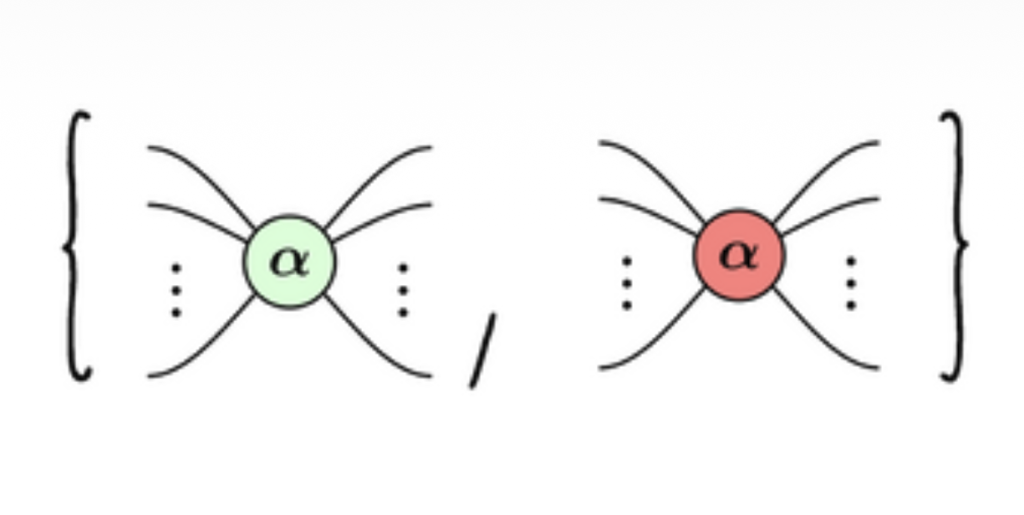
This formalism underpins key innovations in the field and is employed by major technology leaders including PsiQuantum, Google, Microsoft, and IBM to enhance:
- Quantum circuit optimization
- Quantum error correction
- Measurement-based quantum computing
- Quantum simulation
- Quantum foundations
- Quantum natural language processing
Quantum math doesn’t need to be complex
Our approach uses intuitive visuals and basic mathematics to help everyone – from curious learners to experienced educators and field experts –understand and demonstrate quantum concepts. We seek to reduce educational inequalities in quantum studies.
With just basic math skills, you’ll explore and understand quantum ideas in a fun and inclusive way.
- ZX-calculus is graphical math to reason about quantum processes. It is particularly powerful in quantum compilation-related situations
- ZX-calculus helps rewrite circuits, extremely useful in quantum circuit optimization.
- Explore ZX-calculus at the heart of Quantinuum’s TKET compiler and software development kit.
Oxford Educational Experiment
Rewiring How the Mind Learns Quantum
In 2023, the University of Oxford, Quantinuum, and IBM jointly led a groundbreaking educational experiment to explore how Quantum in Pictures could redefine the way young minds learn quantum theory.
The Experiment
- Participants: 54 students aged 15–17 from UK state schools
- Format: 8-week online program, 2 hours per week
The outcomes reshaped assumptions about who can learn quantum theory:
- 82% of students passed the final exam
- 48% achieved distinction-level scores
A Paradigm Shift in Learning through pictorial mathematics
This experiment revealed that high school students without advanced mathematics training could grasp quantum processes, proving that quantum literacy can be democratized and made accessible.
- Mathematical complexity is not a prerequisite for quantum understanding.
- The next generation can learn quantum science earlier, faster, and more creatively than ever before.
- Quantum in Pictures is not just a teaching method; it’s a window into the future of cognition, visualization, and scientific understanding.
More about the experiment
More about ZX-Calculus
Resources
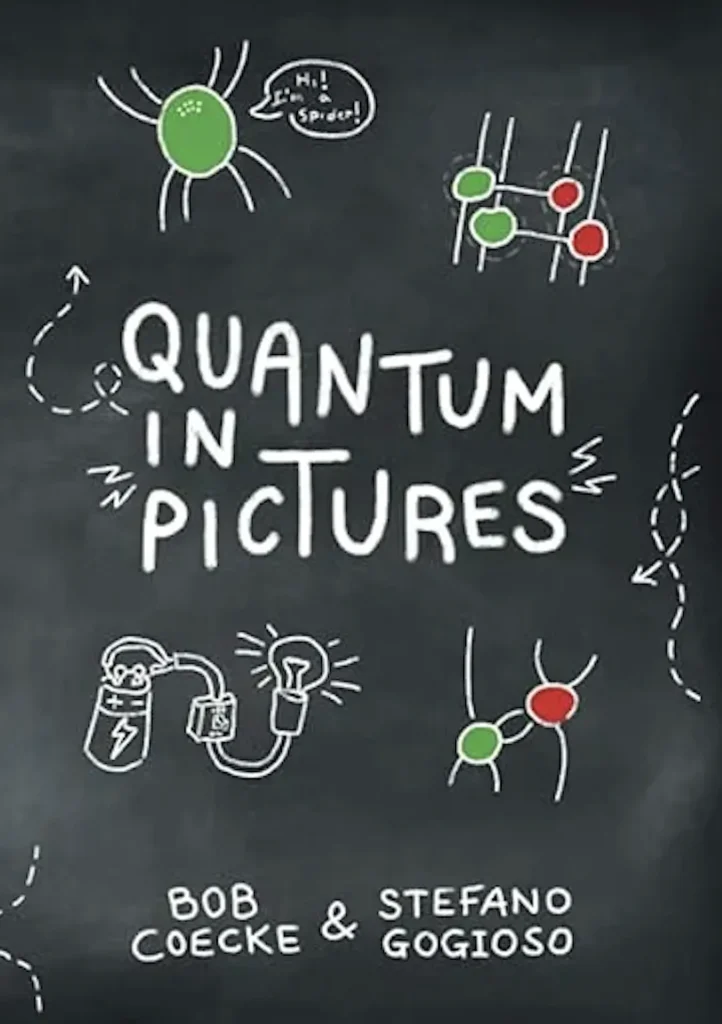
Quantum in Pictures
Bob Coecke & Stefano Gogioso
A book that democratizes access to quantum theory, Quantum in Pictures makes the worlds of quantum physics and quantum computing accessible to everyone—regardless of their mathematical or scientific background. From schoolchildren and parents to educators, business professionals, and science enthusiasts, this book invites readers to explore the fundamental ideas of quantum theory through intuitive visuals and clear explanations, fostering a broader and more inclusive understanding of quantum science and its technological foundations.
Purchase book
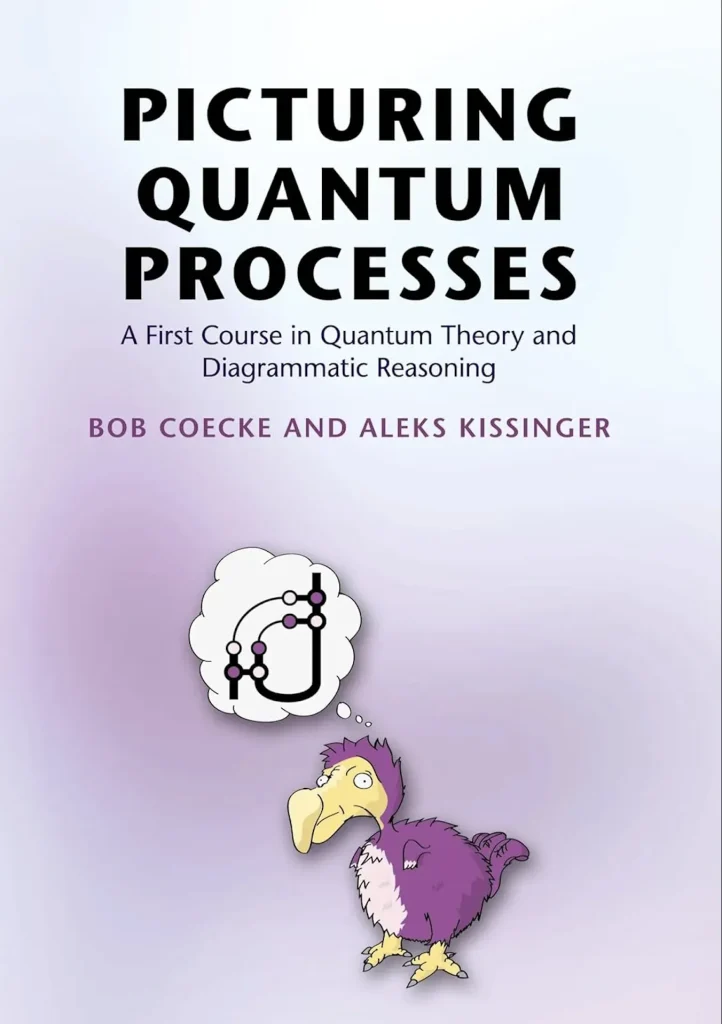
Picturing Quantum Processes
Bob Coecke & Aleks Kissinger
This book, Picturing Quantum Processes, used as a core text at the University of Oxford, offers a fully diagrammatic approach to quantum theory. It bridges classical methods in linear algebra and Hilbert spaces with modern advances in quantum computation and the foundations of quantum mechanics. Featuring over 100 exercises, it provides an accessible yet rigorous introduction for students from undergraduate to PhD level, while serving as a valuable reference for researchers across disciplines such as physics, biology, and cognitive science.
Purchase book
New Structures for Physics
Bob Coecke
This book provides a series of tutorials on mathematical structures which recently have gained prominence in physics, ranging from quantum foundations, via quantum information, to quantum gravity. These include the theory of monoidal categories and corresponding graphical calculi, Girard’s linear logic, Scott domains, lambda calculus and corresponding logics for typing, topos theory, and more general process structures. Most of these structures are very prominent in computer science; the chapters here are tailored towards an audience of physicists.
Purchase book
Research Papers, Blogs & Media
- https://arxiv.org/pdf/2504.01013
- https://arxiv.org/pdf/2512.00141
- arxiv.org/pdf/2303.03163
- arxiv.org/abs/0908.1787
- https://www.theguardian.com/science/2023/dec/16/physicist-bob-coecke-its-easier-to-convince-kids-than-adults-about-quantum-mechanics
- https://www.quantinuum.com/blog/quantum-in-pictures
- https://physicsworld.com/a/teaching-quantum-physics-to-everyone-pictures-offer-a-new-way-of-understanding/
- https://www.cs.ox.ac.uk/news/2280-full.html
- https://arxiv.org/abs/quant-ph/0510032